Water scarcity, rising fuel costs, pressure to improve service delivery, and growing environmental awareness mean maintenance teams need to rethink how routine cleaning and maintenance work is carried out. Efficiency is no longer simply a matter of productivity but also affects sustainability.
One technology that is gaining traction in response to these challenges is the water recycling jetting and vacuum truck. Once considered a specialised and expensive solution, recycling units are increasingly becoming the preferred choice for sewer and stormwater maintenance because they enable operators to do more with less: less water, less downtime, fewer trips, and lower operating costs (which also justifies the higher price tag than a standard jetting and vacuum truck).
Limitations of traditional cleaning
According to Sebastian Werner, MD of Werner Pumps, leading South African manufacturer of high-pressure jetting and vacuum equipment, conventional sewer cleaning typically relies on a straightforward process: a high-pressure jetting and vacuuming truck is filled with clean water, which is then used for high-pressure jetting to dislodge debris and clear blockages. The resulting sludge and wastewater are vacuumed into the tank for disposal.
“Once the truck’s water tank is empty, operators must leave the site to refill them before work can continue, even if the waste tank is not full,” Werner explains. Depending on location and operating conditions, this can result in significant downtime and additional fuel consumption. For municipalities working in remote areas, or regions where water access is limited, these interruptions can have a substantial impact on productivity.
At the same time, using large volumes of potable water for maintenance activities is coming under increasing scrutiny. Organisations are therefore looking for ways to reduce consumption without compromising operational effectiveness.
A different approach to sewer and stormwater maintenance
Werner says that by reusing water recovered during the cleaning process, water recycling trucks can operate far more efficiently.
Instead of relying solely on a finite supply of fresh water, the system continuously recovers, filters and reuses water extracted from the sewer or stormwater line being cleaned. This allows operators to continue jetting for extended periods without repeatedly returning to refill their tanks.
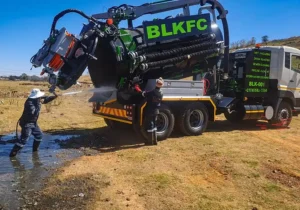
As the high-pressure jetting hose removes debris and sediment from the pipeline, the vacuum system simultaneously extracts the resulting mixture of water and solids. The solids are separated and retained within the sludge tank, while the recovered water passes through a filtration process before being returned to the jetting system for immediate reuse.
The result is a continuous cleaning cycle that dramatically reduces fresh water consumption while maintaining cleaning performance.
Designed for productivity
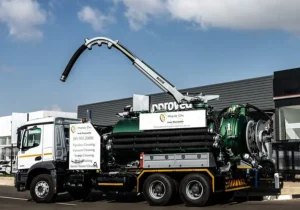
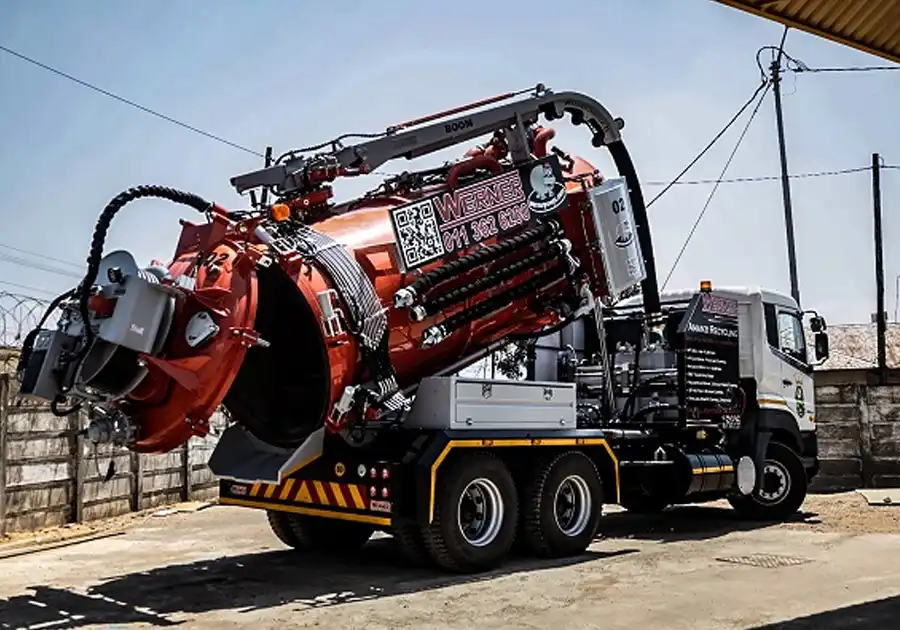
“Werner Pumps has developed its Amanzi Recycler specifically for the demands of African operating conditions,” Werner says.
Manufactured in South Africa, the truck combines high-pressure jetting, vacuum recovery and water recycling within a single integrated system. At the heart of the unit is a rotating oscillating filter drum that separates solids from recovered water, allowing continuous recycling even under challenging conditions involving heavy sediment or grease.
The unit features a 12 500-litre 304 stainless steel tank, a high-capacity vacuum system capable of delivering up to 3 100 m³/h suction, and a high-pressure jetting system operating at 350 litres per minute at 205 bar. A 360-degree telescopic suction boom and wireless remote-control functionality further enhance operator efficiency and ease of use.
Importantly, Werner says, the recycling process takes place continuously while cleaning operations are underway. Jetting and vacuuming occur simultaneously, allowing crews to maintain productivity without frequent interruptions.
According to Werner Pumps, a single recycling unit can save approximately 61 million litres of fresh water annually under normal operating conditions. The reduction in water consumption is accompanied by fewer refilling trips, lower fuel usage, less vehicle wear and tear and speedier service delivery.
Beyond water savings
“Many African municipalities are operating in water-stressed regions and often have to maintain infrastructure over large geographic areas,” says Werner. “That means that, with these trucks, the primary benefit is often about saving water. But when we talk to operators, they tell us there are also massive productivity gains that they find just as valuable.”
Every trip back to a water source represents lost time. By reducing the need for refilling, recycling units allow maintenance teams to spend more time working and less time travelling. This can translate into more pipelines cleaned, more blockages cleared and more maintenance work completed within a given shift.
Reduced travel means lower fuel consumption and lower emissions. Fewer interruptions can improve scheduling.
Werner says customers have told him that the technology is also particularly valuable in remote locations where access to suitable water sources may be limited. “Instead of planning around available refill points, teams can just stay on site for longer to complete more work before returning to base,” he says.
Built for African conditions
Local aftersales service and support are also important considerations when purchasing capital equipment and that has historically been one of the reasons uptake of recycling units has been slow, according to Werner.
Imported equipment often delivers impressive specifications, but long lead times for parts and technical support can become a challenge when equipment is operating in demanding environments.
Werner Pumps manufactures the Amanzi Recycler locally at its facility in Springs and can build the units on a customer’s preferred chassis platform. It also offers operator training in the field to every customer who purchases a new unit. This allows municipalities and contractors to align new equipment with existing fleet strategies while maintaining access to local technical expertise, spare parts and aftersales support.
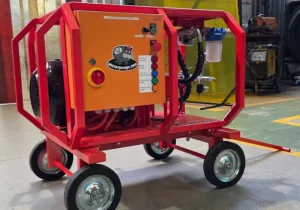
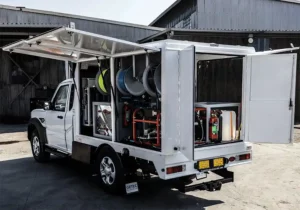
Werner Pumps also supplies a range of accessories and application-specific equipment, enabling customers to configure units according to their operational requirements.
From innovation to industry standard
Werner believes (and says sales data shows) that the adoption of water recycling technology in wastewater and sewer management is likely to continue to accelerate. What was once viewed as an innovative alternative is increasingly becoming standard practice.
“Municipalities and contractors are under pressure to do more with the resources they have available,” says Werner. “Water recycling technology allows them to improve productivity while significantly reducing water consumption. That’s why we’re seeing growing interest in recycling units, both in South Africa and elsewhere on the continent.”